
person · also Abram
Abraham
אַבְרָהָםἈβραάμ
Abraham, originally named Abram, was the patriarch whom God called to leave his homeland and blessed to become the father of many nations, establishing His covenant with him and his descendants.
- verses
- 275
- first named
- Genesis 11:26
- last named
- 1 Peter 3:6
- period
- the Patriarchs
- tribe
- Early Patriarch
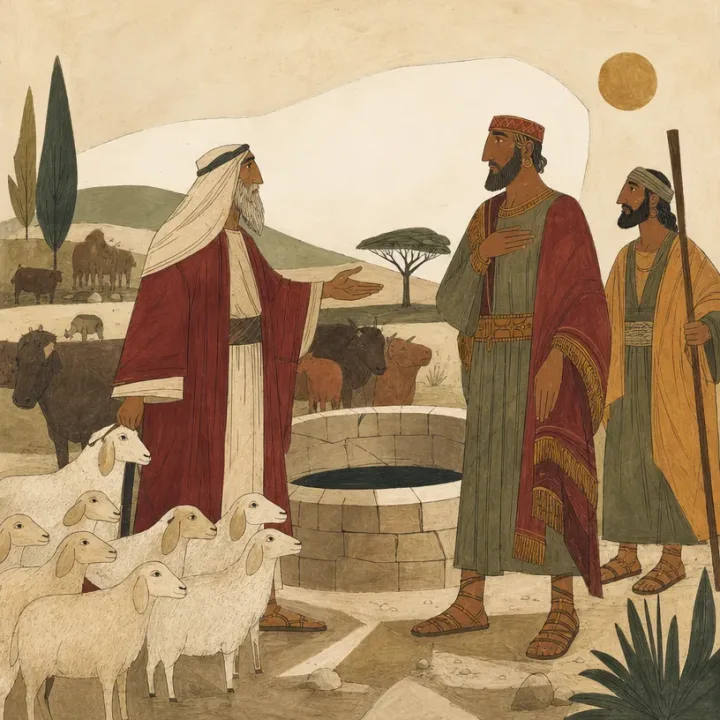
Abraham enters the narrative already in motion. His family has left Ur and settled partway along the road; the call that reaches him asks him to keep going, to a land he is not shown in advance. Everything that follows in Genesis hangs on that unfinished journey.
The promise and the delay
What is promised is specific — land, descendants, a name — and the delay before any of it arrives is the point of the story rather than an interruption to it. Sarah is past childbearing. The land belongs to other people. Abraham buys a field in it only once, as a burial plot for his wife.
Between the promise and Isaac come Hagar and Ishmael, an arrangement that solves the problem by ordinary means and complicates the household permanently. Genesis does not tidy this away: both sons are blessed, and both are given futures.
Why he anchors the graph
Nearly every later figure in the Hebrew scriptures is placed by reference to Abraham, and the gospel of Matthew opens its genealogy by tracing Jesus back to him. That is why so many chains on this site pass through him — he is less a single entry than the junction the rest of the material is organised around.
Description
Who was Abraham?
Abraham, initially named Abram, was a central figure in the early history of the Israelites. He was born in Ur of the Chaldeans and was the son of Terah (Gen.11.26-31). God called Abram to leave his country and family and go to a land that He would show him, promising to make him a great nation and to bless all peoples through him (Gen.12.1-3).
Abram obeyed God and journeyed to Canaan with his wife Sarai and his nephew Lot (Gen.12.4-5). God reaffirmed His covenant with Abram, promising him numerous descendants and the land of Canaan (Gen.13.14-17; 15.1-21). God changed Abram's name to Abraham, meaning "father of many," and Sarai's name to Sarah (Gen.17.1-16).
Despite their advanced age, Abraham and Sarah miraculously bore a son, Isaac, through whom God's covenant would be established (Gen.18.1-15; 21.1-7). Abraham demonstrated his faith and obedience when God tested him by asking him to sacrifice Isaac (Gen.22.1-19). God provided a ram as a substitute, reaffirming His promise to Abraham (Gen.22.15-18).
Abraham's faith was credited to him as righteousness (Gen.15.6; Rom.4.3; Gal.3.6; Jam 2.23). He became known as the father of the faithful and the friend of God (Isa.41.8; 2Ch.20.7; Jam 2.23). God's covenant with Abraham, which included the promise of land, descendants, and blessing, was passed down to his son Isaac and grandson Israel (or 'Jacob') (Gen.26.1-5; 28.10-15).
The life and faith of Abraham are significant in both the Old and New Testaments. He is recognized as the ancestor of the Israelites (Exo.2.24; 3.6, 15-16; 4.5) and is mentioned in connection with God's faithfulness and His promises (Exo.6.8; 32.13; 33.1; Lev.26.42). In the New Testament, Abraham is upheld as an example of faith (Rom.4.1-3, 9, 12, 16; Gal.3.6-9, 14, 29; Heb.11.8-19) and is identified as the spiritual father of all believers (Rom.4.11-12, 16-17; Gal.3.7, 29).
Jesus Christ is identified as the ultimate fulfillment of God's promises to Abraham (Mat.1.1; Gal.3.16). Through faith in Christ, believers from all nations become part of Abraham's spiritual lineage and heirs to the promises made to him (Gal.3.7-9, 14, 26-29).
Relations
Direct connections
Every entity the graph places in a stated relation with this one, grouped by the kind of link. Each relation is authored once and its inverse derived, so both ends always agree. Rows marked “registry” come from the identity spine rather than from a verse, and a row marked “which bearer is the source’s decision” is one where the name could have meant more than one person. The last group is not a relation at all — it counts the events two entities stand in together.
The 10 best-attested of 73 are drawn. All 73 are listed below.
Ancestor of
Associated with
Child of
- TerahregistryGenesis 11:31
Father of
- IsaacregistryGenesis 21:5Genesis 22:2Genesis 22:7 +8
- Ishbakregistry, no verse
- IshmaelregistryGenesis 17:26Genesis 17:23Genesis 17:25 +4
- Jokshanregistry, no verse
- Medanregistry, no verse
- Midianregistry, no verse
- Shuahregistry, no verse
- Zimranregistry, no verse
- IsraelGenesis 48:16
- Jews Who BelievedJohn 8:39
- JudahJohn 8:53
Parent of
Sibling of
- Haranregistry, no verse
- NahorregistryGenesis 22:23Genesis 24:15
- SarahregistryGenesis 20:5
Site of
Spouse of
- HagarregistryGenesis 16:3
- Keturahregistry1 Chronicles 1:32
- SarahregistryGenesis 11:29Genesis 11:31Genesis 12:11 +14
Took part in
- Abimelech’s askingGenesis 20:9Genesis 20:10
- Abimelech’s giving of Cattle, Menservant, and MaidservantGenesis 20:14Genesis 20:16
- Abraham and Abimelech’s covenantGenesis 21:27Genesis 21:32
- Abraham and Abimelech’s oathGenesis 21:23Genesis 21:24Genesis 21:31
- Abraham and Isaac’s return of Two ServantsGenesis 22:5Genesis 22:19
- Abraham Isaac WalkingGenesis 22:6Genesis 22:8
- Abraham, Acquired Possessions, and Acquired People’s acquisition of Acquired Possessions and Acquired PeopleGenesis 12:5Genesis 12:16
- Abraham, Melchizedek, and Levi’s apportionment of LeviHebrews 7:2Hebrews 7:4Hebrews 7:6 +1
- Abraham’s bringing of Heifer, Goat, Ram, Turtledove, and Young PigeonGenesis 15:10
- Abraham’s building of AltarGenesis 12:7Genesis 12:8
- Abraham’s burial of SarahGenesis 23:6Genesis 23:19
- Abraham’s burnt offering of Isaac and RamGenesis 22:2Genesis 22:13
- Abraham’s circumcision of Circumcision, Male, Males Born In Household Or Purchased, Ishmael, Abraham Household Males, and AbrahamGenesis 17:23Genesis 17:24Genesis 17:26 +1
- Abraham’s departureGenesis 12:4
- Abraham’s getting upGenesis 23:3Genesis 23:7
- Abraham’s journey — first named at Genesis 20:1Genesis 20:1Genesis 20:13
- Abraham’s journey — first named at Genesis 13:1Genesis 13:1Genesis 13:3
- Abraham’s paymentGenesis 23:13Genesis 23:16
- Abraham’s purchase of Ephron Field and Jacob CaveGenesis 49:30
- Abraham’s routing of Chedorlaomer Army, Chedorlaomer, and Allied KingsGenesis 14:15
- Abraham’s transferGenesis 25:5Genesis 25:6
- Abraham’s travelGenesis 12:6Genesis 12:8Genesis 12:9 +1
- Abraham’s withholding of IsaacGenesis 22:12Genesis 22:16
- Abram LivingGenesis 13:12
- All Nations BlessedGalatians 3:8Galatians 3:14
- Chief Servant, Abraham, Rebekah, and Servant Girls’ journey of WifeGenesis 24:7
- Covenant EstablishmentGenesis 17:2
- Hagar’s birthGenesis 16:15Genesis 16:16
- Heth and Ephron’s givingGenesis 23:4Genesis 23:11
- Isaac and Ishmael’s burial of AbrahamGenesis 25:9Genesis 25:10
- Jews Who Believed, Addressees, and Abraham’s killing of JesusJohn 8:40
- LORD and Isaac’s blessing of FamilyGenesis 28:4
- Lord Giving LandDeuteronomy 1:8
- LORD’s covenantExodus 6:4
- LORD’s giving of Land — first named at Genesis 28:4Genesis 28:4
- LORD’s giving of Land — first named at Genesis 15:7Genesis 15:7
- LORD’s remembrancePsalms 105:42
- Naming of Children and Sons Of JosephGenesis 48:16
- PromiseDeuteronomy 6:10
- Sarah’s birthGenesis 21:2Genesis 21:3Genesis 21:5 +1
- Sarah’s birth of Sarah and IsaacGenesis 17:19Genesis 17:21
- Sarah’s giving of HagarGenesis 16:3Genesis 16:5
- Selling MachpelahGenesis 23:9Genesis 23:18Genesis 23:20
- Terah’s fatherhoodGenesis 11:26Genesis 11:27
- Word Of Lord ComingGenesis 15:1Genesis 15:4
Stands in the same events as
- Isaac46 events
- LORD43 events
- Sarah30 events
- Israel15 events
- Abimelech13 events
- Lot10 events
- Heth9 events
- Ephron9 events
- Canaan8 events
- Hagar8 events
- Beersheba6 events
- Ishmael6 events
and 94 more, ordered by how many events they share.
Places
Where this happens
The places the claims about this person reach, drawn where the gazetteer locates them. A point is where a row puts them and never where tradition does; no line joins two points, because the rows state where and not in what order.
Read it
Where to read it
Every verse of the text carried here that names this entity — 275, across 27 books. The name is written 308 times in them.
Genesis164 verses
11:2611:2711:2911:3112:112:412:512:612:712:912:1012:1412:1612:1712:1813:113:213:413:513:713:813:1213:1413:1814:1214:1314:1414:1914:2114:2214:2315:115:215:315:1115:1215:1315:1816:116:216:316:516:616:1516:1617:117:317:517:917:1517:1717:1817:2217:2317:2417:2618:618:718:1118:1318:1618:1718:1818:1918:2218:2318:2718:3319:2719:2920:120:220:920:1020:1120:1420:1720:1821:221:321:421:521:721:821:921:1021:1121:1221:1421:2221:2421:2521:2721:2821:2921:3422:122:322:422:522:622:722:822:922:1022:1122:1322:1422:1522:1922:2022:2323:223:323:523:723:1023:1223:1423:1623:1823:1923:2024:124:224:624:924:1224:1524:2724:3424:4224:4824:5224:5925:125:525:625:725:825:1025:1125:1225:1926:126:326:526:1526:1826:2428:428:928:1331:4231:5332:935:1235:2748:1548:1649:3049:3150:1350:24
Exodus9 verses
Leviticus1 verse
Numbers1 verse
Deuteronomy7 verses
Joshua2 verses
1 Kings1 verse
2 Kings1 verse
1 Chronicles6 verses
2 Chronicles2 verses
Nehemiah1 verse
Psalms4 verses
Isaiah4 verses
Jeremiah1 verse
Ezekiel1 verse
Micah1 verse
Matthew6 verses
Mark1 verse
Luke14 verses
1:551:733:83:3413:1613:2816:2216:2316:2416:2516:2916:3019:920:37
John9 verses
Acts7 verses
Romans9 verses
2 Corinthians1 verse
Galatians9 verses
Hebrews10 verses
James2 verses
1 Peter1 verse
Onward
Where this page goes
Not the direct relations above — these are one hop further out, ranked so that a rare shared connection outweighs a common one. Descriptions by STEPBible TIPNR.
Where they appear
Chapter by chapter
Atlas's reading of each chapter this person appears in, in canonical order. One line per chapter, and each leads to the whole of it.
- Genesis 12Abram left Haran, travelled through Canaan, built altars, and went down to Egypt, where his anxious arrangement about Sarai brought him wealth and trouble.
- Genesis 13Abram went up from Egypt, returned to Bethel, separated from Lot, and built an altar at Hebron.
- Genesis 14Abram mobilized 318 trained men from his household, pursued the kings by night, routed their army, and recovered Lot, the people, and the goods.
- Genesis 15Abram questioned the promise, believed the LORD, arranged the carcasses, drove away the birds of prey, and received the covenant.
- Genesis 16Abram listened to Sarai, went to Hagar, and later named the son she bore Ishmael.
- Genesis 17Abraham fell facedown, received his new name, questioned the promise, and circumcised every male in his household.
- Genesis 18Abraham welcomed the three men, arranged an unexpectedly magnificent meal, walked toward Sodom, and haggled with the LORD for the city’s survival.
- Genesis 19Abraham returned to the place where he had stood before the LORD and watched smoke rise from the plain.
34 more chapters, from Genesis 20 to 1 Peter 3
- Genesis 20Abraham called Sarah his sister, explained the deception, received Abimelech’s gifts, and prayed for the household’s healing.
- Genesis 21Abraham named and circumcised Isaac, sent Hagar and Ishmael away, made a covenant with Abimelech, and planted a tamarisk tree.
- Genesis 22Abraham travels to Moriah, binds Isaac, raises the knife, offers the ram, and returns to Beersheba.
- Genesis 23Abraham mourned and wept for Sarah, then negotiated, paid for, and secured a burial site for her.
- Genesis 24Abraham sends his servant to find Isaac a wife among his kindred, and forbids him to take Isaac back to the land from which he came.
- Genesis 25Abraham takes Keturah as a wife, gives Isaac his estate, sends gifts with the sons of his concubines, and dies at 175 before being buried with Sarah.
- Genesis 28Abraham was named as the bearer of the blessing Isaac passed on to Jacob.
- Leviticus 26Abraham is named in the covenant the LORD remembers.
- Deuteronomy 6Abraham is named among the fathers to whom the land was sworn.
- Deuteronomy 9Abraham is remembered before the LORD as one of the servants whose promise bears upon Israel's fate.
- Psalms 47Abraham is named as the one whose God gathers the assembled nobles into his people.
- Psalms 105Abraham received the covenant whose promise became the inheritance of Canaan.
- Isaiah 29Abraham is named as the one whom the LORD redeemed.
- Isaiah 41Abraham is named as the friend whose descendant, Israel, has been chosen.
- Isaiah 51Abraham was called when he was one, then blessed and multiplied.
- Isaiah 63Abraham is said not to know the people who nevertheless call the LORD their Father.
- Jeremiah 33Abraham is named among the ancestors whose descendants will again have rulers.
- Micah 7Abraham is named as the recipient of loving devotion sworn by God to the fathers.
- Matthew 1Abraham begins the genealogy as the father of Isaac.
- Matthew 8Abraham is named among those with whom many will share the banquet in the kingdom of heaven.
- Luke 3Abraham was named by John and appears in Jesus’ genealogy.
- Luke 13Abraham is named among those seen in the kingdom of God while others are outside.
- Luke 16Abraham answers the rich man from across the fixed chasm and directs him back to Moses and the Prophets.
- John 8Abraham is claimed as father, invoked in the argument, and said by Jesus to have rejoiced at seeing His day.
- Acts 7Abraham left Mesopotamia, received God’s promise, and bought a tomb at Shechem.
- Romans 4Abraham believed God, faced the decrepitness of his body and the lifelessness of Sarah’s womb, and did not waver in the promise.
- 2 Corinthians 11Abraham appears in the same boast, as both sides claim descent from him.
- Galatians 3Abraham believed God, received righteousness, and became the figure beside whom those with faith are blessed.
- Galatians 4Abraham is said to have had two sons, one by the slave woman and one by the free woman.
- Hebrews 6Abraham waits patiently and obtains the promise.
- Hebrews 7Abraham gave Melchizedek a tenth of the plunder after returning from the slaughter of the kings.
- Hebrews 11Abraham went where he was called without knowing the destination, lived as a stranger, and offered Isaac when tested.
- James 2Abraham offered his son Isaac on the altar, and his faith worked with his actions.
- 1 Peter 3Abraham is named as the husband whom Sarah obeyed and called lord.
Sources